
Helping Good Leaders Become Great Leaders
Executive & Leadership Coaching
Executive & Leadership Coaching for Leaders in Complex Organizations
for Leaders in Complex Organizations
Strengthen leadership performance so decisions are clearer, execution is more reliable, and outcomes improve where it matters most.

Trusted by Leaders in the World’s Most Respected Companies
Built for the real demands of leadership within complex organizations.

When the Role Gets Bigger, Performance Gets Harder
If you’re leading in a complex organization, you feel the pressure.
At some point, the role gets bigger—and what made you successful before is no longer enough.
You’re making more decisions with real consequences, managing more complexity, and responsibility for outcomes that matter.
If you’re responsible for developing leaders, you see the same pattern.
Skilled, proven people step into bigger roles—and the demands change faster than performance does.
They know what to do, but consistently operating at that next level requires more—across decisions, execution, and leadership.
This is where it starts to show up in the work itself.
It shows up in how decisions are made, how work moves forward, and how leaders operate across competing priorities and pressure.
| EXECUTIVE & LEADERSHIP COACHING FOCUS AREAS
Coaching engagements are focused on strengthening leadership skills and performance across these core areas:
1. How a Leader THINKS & DECIDES:
Analytical Judgment & Decision-Making Amid Complexity
Think clearly, focus on what matters most, and make sound, grounded decisions in complex situations.Leadership Mindset & Capacity
See beyond your role, contribute to the bigger picture, and readily handle greater scope, responsibility, and complexity.
2. How a Leader OPERATES, MANAGES, & DELIVERS:
Execution, Ownership & Management
Drive work forward, manage projects and team members, and deliver high-quality results across multiple priorities and timelines.
Communication, Influence & Executive Presence
Communicate and engage confidently with colleagues in ways that build trust and strong working relationships.
Team & Organizational Collaboration
Work effectively with team members and others, coordinate across departments, and contribute to shared outcomes.
3. How a Leader BUILDS & GROWS BUSINESS:
Business Development & Client Relationships
Build strong client relationships, deliver on client commitments, and contribute to business growth and new business.
4. How a leader GROWS & SUSTAINS PERFORMANCE:
Workload Management & Sustainability
Manage workload and competing demands, and sustain high performance over time without burnout or bottlenecks.
Career Growth & Direction
Understand what the next level requires, set clear career goals, and position yourself for advancement and new opportunities.Work-Life Balance & Personal Fulfillment
Maintain harmony between professional demands and personal life, including relationships, interests, and overall quality of life.
Yet even when leaders are strong across these areas, their performance doesn’t always keep pace with the growing demands of the role.
| WHERE LEADERSHIP PERFORMANCE PLATEAUS
Even experienced, highly-skilled leaders can find that high-quality performance becomes harder to sustain as roles expand.
Execution spans more moving parts and competing priorities.
Decisions carry greater consequence and require balancing risk in real time.
Influence depends on alignment across stakeholders—not just authority.
Leaders often understand what’s required—but it’s harder to deliver at that level, consistently and sustainably, as the scope and expectations continue to rise.
Most leadership development and executive coaching focuses on strengthening how leaders operate—through feedback, targeted development, and real-time application in their role.
That work is essential.
But at higher levels, it reaches a point where improving skills and behavior alone is no longer enough.
At this stage, the issue isn’t knowing what to do—it’s being able to operate at that level reliably and without burnout or bottlenecks.
This shows up in how the leader actually operates: how they prioritize under pressure, make decisions with incomplete information, stay at the right level of involvement, and lead others through complexity.
What’s driving that is how the leader is internally structured to operate.
When that internal structure no longer matches the demands of the role, performance becomes more effortful to maintain—regardless of skill or experience.
Think of it this way. It’s like trying to run a more challenging level of a video game on an operating system that hasn’t been updated.
A leader can continue to build skill and push performance — but if the system underneath can’t support the level, things start to break down, glitch, and more effort is required just to keep everything on track.
Think of it this way. It’s like trying to run a more challenging level of a video game on an operating system that hasn’t been updated.
A leader can continue to build skill and push performance — but if the system underneath can’t support the level, things start to break down, glitch, and more effort is required just to keep everything on track.
| WHEN INTERNAL STRUCTURE ALIGNS WITH THE ROLE
This is advanced, structured work developed within the Great Leader™ approach—focused on reorganizing and strengthening the internal structure leaders operate from so it fully supports the level, complexity, and demands of the role.
When internal structure aligns with the demands of the role, the work itself changes.
Execution no longer requires constant effort to keep everything moving.
Decisions become more direct and grounded—even under pressure.
Influence builds more naturally, without having to manage every interaction.
Performance becomes more consistent, reliable, and sustainable—without having to force or hold it together.
Leaders are able to stay focused on what the role requires, operate with clarity across competing demands, and build and trust their team to deliver.
Capacity expands—not by pushing harder, but because the way the leader operates now supports what the role requires.
| HOW COACHING ENGAGEMENTS ARE STRUCTURED
Coaching engagements begin with a thorough intake interview and targeted assessments to understand the leader’s role, current demands, how they operate, and where performance needs to strengthen. From there, a customized development plan is established to guide the work.
The work is grounded in real situations—how decisions are made, how work moves forward, how teams are led, how stakeholders are engaged, and how outcomes are delivered—often under pressure, across competing priorities, and within the realities of workload, time, energy, and personal life.
The focus is twofold:
Strengthening how leaders think, operate, and deliver across the full range of their role—decisions, execution, relationships, and results
Reorganizing and strengthening the internal structure the leader operates from so it fully supports the level, complexity, and demands of the role
As a result, leaders operate with greater clarity across competing demands, navigate situations more effectively, and deliver outcomes with consistency and control—while sustaining a way of working that supports both performance and personal well-being.
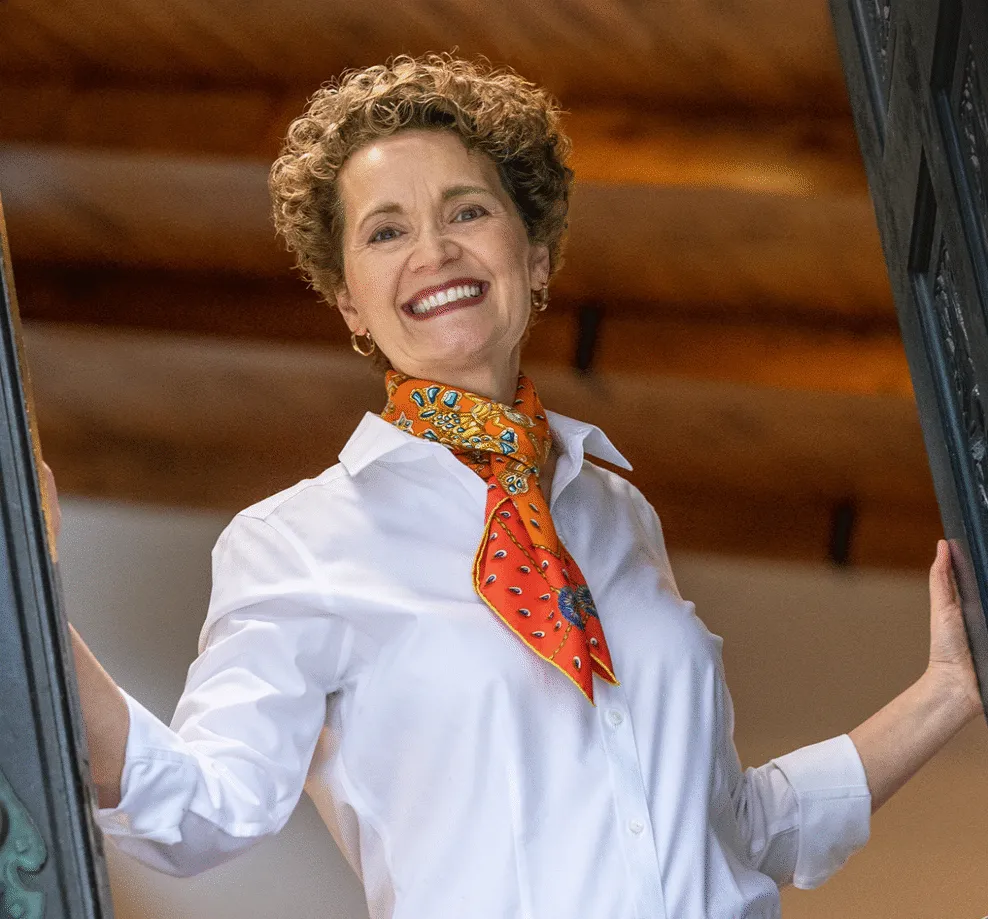
| ABOUT BJ BRIGHTON, CST, LCI
BJ Brighton, CST, LCI is an executive and leadership coach focused on how leaders operate under complexity, where how you think, how you execute, and how you show up and deliver matter.
She works with mid-level, senior, and C-suite leaders, including professionals such as attorneys and entrepreneurs, in high-responsibility roles where performance directly impacts clients and the organization.
BJ is known for her hands-on, practical style and an ability to quickly identify the underlying drivers of performance, allowing leaders to address what is actually shaping outcomes, not just what appears on the surface.
Her work is grounded in the Great Leader™ approach, focused on reorganizing and strengthening the internal structure leaders operate from so it fully supports the level, complexity, and demands of the role.
With over a decade of experience, she has worked with leaders across complex organizational environments and has spoken at in-house events and industry conferences on leadership performance and development.
REAL LEADERS
What Changes When Leadership Is Updated From the Inside...
Doubled revenue and took control of client work and how the practice runs ------- "As a corporate attorney running my own firm, I was overworked, burned out, and frustrated. BJ is an amazing coach and takes the guesswork out. All the pieces I knew were there but didn’t know how to bring together, she helped me see how they fit and how to operate from them. Since the coaching, I’ve doubled my revenue, become much clearer on how to prioritize my time and client work, and feel more in control of how I run my practice. I’m more focused on the right clients and opportunities, more confident in how I show up with clients, and more intentional about how I build and grow my practice. I’ve also been able to create real space for my family and rediscovered the joy and passion in my legal career."

Fully stepped into the Chairman role without losing control of the business ------- "After building and running my company, I moved from CEO into the Chairman role. It wasn’t an easy transition. I was used to being in everything and making the calls, and letting someone else run the business without stepping in didn’t come naturally. Working with BJ made it clear I was still operating like the CEO, even though I wasn’t in that seat anymore. Once I saw that, I focused where I should be as Chairman—on strategy, guidance, and supporting the CEO and leadership team. I’m no longer in the day-to-day, and I’ve got more time to enjoy my golf game."

From 'needs executive presence' to leading confidently at the C-suite and Board level ------- "I was identified as top talent and promoted to lead the finance team, presenting regularly to the C-suite and Board. After my first few presentations, I was told I needed to improve my 'executive presence' —but no one could clearly define what that meant or how to do it. I felt a lot of pressure to get it right. I worked long hours preparing and perfecting everything, and the stress started to affect how I was leading my team and showing up at home. Working with BJ wasn’t about fixing my presentation skills. She helped me see the old pattern I was still operating from. I stopped trying to prove myself and started fully occupying my VP leadership role. I delegated more clearly, showed up to senior meetings more direct and candid, and those hard conversations with the executive team and Board became easier and more productive. Over time, I stepped into the Chief Accounting Officer role with confidence."

Stopped carrying the team and got back to leading and driving client work & deals ------- "I was working hard to keep all the plates spinning so nothing crashed. I was frustrated with my team and irritated that I was having to do their work. I was working nights and weekends just to catch up on my own work, which didn’t make my wife happy. BJ’s coaching helped me see that the problem wasn’t just my team. It was how much pressure I was putting on myself to keep everything together. Instead of leading and developing my team, I was jumping in and fixing things myself. Through the coaching, all that changed. It wasn’t instant or immediately hands-off, but I started to lead in a way that let my team work, struggle a bit, and take responsibility without me stepping in to rescue everything. As a result, my team became more accountable, and I was able to stay focused on client work and keep deals moving forward."

From constant pressure and burnout to clear decisions and steady execution ------- "In my CSO role with high stakes and big responsibility, I relied on deadline pressure to deliver. The toll showed up in team turnover, my health, and my marriage. That had been there all along. Despite my abilities and accomplishments, I was dealing with work anxiety, procrastination, and feeling like a fraud. No one knew it. I looked confident, successful, and in control. BJ helped me see the internal setup I’d been living and leading from for years. As we reworked how I was operating internally, my leadership changed. No more turnover on my team, clearer decisions, and a solid, consistent pace that moves things forward. With the coaching, I was able to significantly reduce my anxiety medication with my psychiatrist because I no longer needed it to get through the week. I still operate in a demanding, high-stakes environment, but now I’m enjoying it instead of grinding myself into the ground."

Made the tough people decisions and the team started performing at the level expected ------- "One thing I’ve learned working with BJ is that avoiding tough talks doesn’t make you a great leader, it just makes things harder for everyone. I knew for a while that some people on my sales team weren’t the right fit. I just didn’t want to deal with it. I’d give them more time and chances than I should have, while my top performers were frustrated and the numbers weren’t where they needed to be. Coaching helped me see my inner structure, why I was avoiding those tough conversations and not trusting my judgment. Once that clicked, everything moved. I stopped tolerating wrong fits, hired differently with culture front and center, and the team found its rhythm. Now I’ve got the right people in the right seats. The team is energized and performing, and we’re delivering at the level we should be. It didn’t change who I am. It’s like the leader I always knew I was finally stepped forward and took over. BJ, appreciate you!"
Stopped holding back and stepped into a leadership role with real responsibility ------- “In my product portfolio lead role, I had a breakthrough idea I believed could make a real difference, but I didn’t think I had the standing to bring it to senior leaders. I kept talking myself out of it, even though I knew it mattered. Working with BJ wasn’t about learning to speak up more. It was about reorganizing how I saw my role, my authority, and my expertise. Once that shifted, I stopped waiting for permission. I brought the idea forward, it was taken seriously, and I was asked to lead the implementation, which I accepted without hesitation. The coaching changed how I showed up in my work. I stepped into a more visible role, contributed more directly to decisions and outcomes, and took ownership of work at a higher level. I went on to oversee a €4.6B ($5B USD) innovation portfolio, trusted with real responsibility instead of staying behind the scenes.”

Moved into senior leadership and a board role by finally operating at the right level ------- “I honestly thought I was fine and didn’t need coaching. I was well-trained, respected, and getting results. Yet my career was stalled. What I didn’t see was how much I was settling, especially in my role, my pay, and what I was accepting out of loyalty to my employer. I wasn’t unhappy, but I did feel a growing gap between the level I was capable of, the environment I was in, and where I wanted to be. The coaching didn’t try to change me. It helped me see what I hadn’t been questioning. I realized I had already outgrown the role I was in and needed to step into something more aligned with my skills and abiliies. I moved into a role where my leadership and expertise were fully valued and compensated appropriately, with the upward mobility I was looking for. I’ve since moved into an SVP role and taken on a board position, not just because I worked harder, but because I was finally leading from the right internal footing.”

Client's name changed and company name withheld to protect client confidentiality.
© 2026 Great Leader, All Rights Reserved
For inquiries or coaching engagements:
Call or text: +1 215-315-3406